Beyond the Algorithm: Designing Social Discovery for Spotify
Leveraging the "Jobs-to-be-Done" framework to increase user engagement via gamified shared playlists.
My Role
Product Designer & Researcher
Team
4 Designers (Collaborative Academic Project)
Company
Student Project (Unofficial Spotify Feature)
Tools
Figma, Miro, Otter.ai (User Interviews)
Introduction
Music is Better with Friends: Solving the "Passive Sharing" Problem
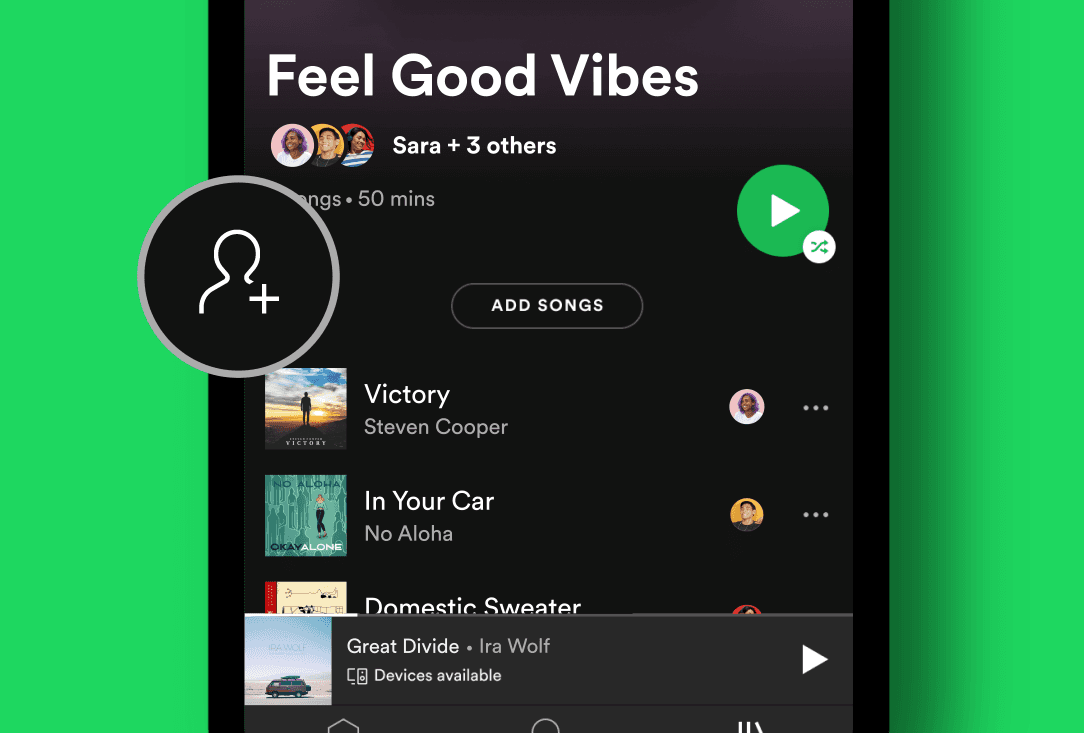
Spotify dominates the streaming market, but its social features lag behind its algorithmic ones. Our research revealed a critical gap: the most meaningful music discovery happens between friends, yet Spotify's current shared playlists are static and passive. This project aimed to bring that vibrant, off-platform social energy back into the app by transforming playlists into active, gamified communities.
Stakeholder and Problem Statement
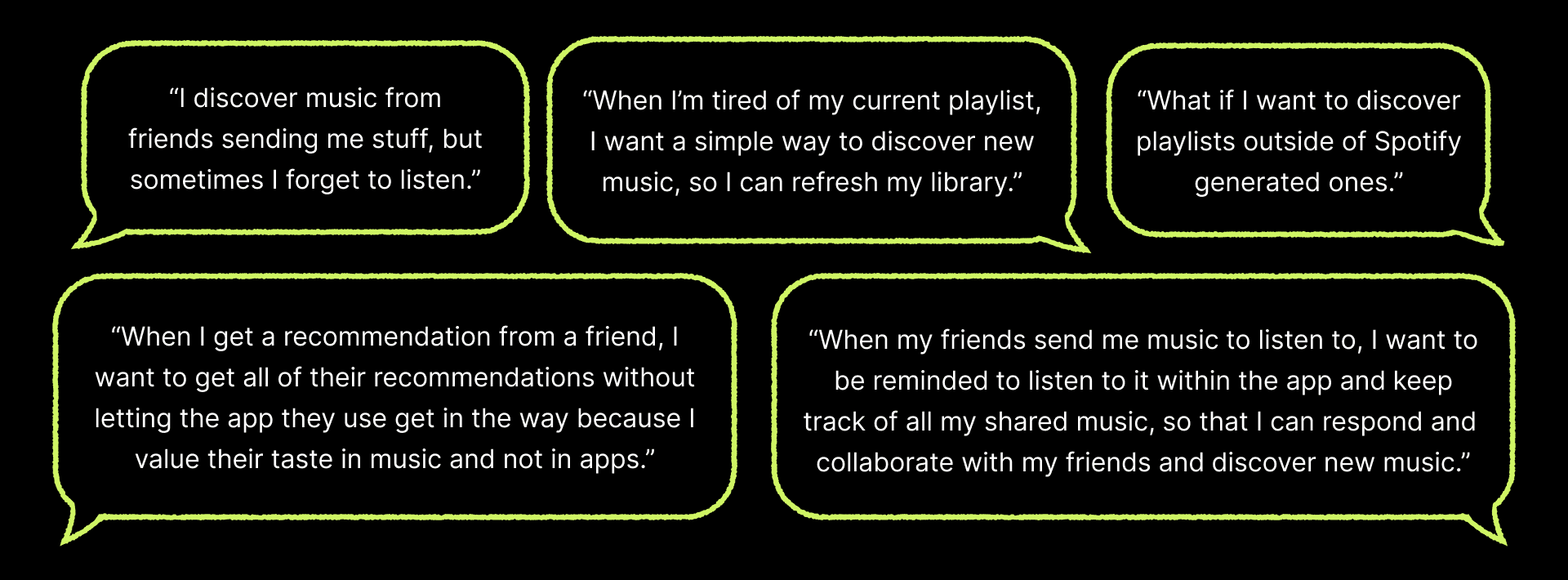
Users Trust Friends, Not Algorithms
Process
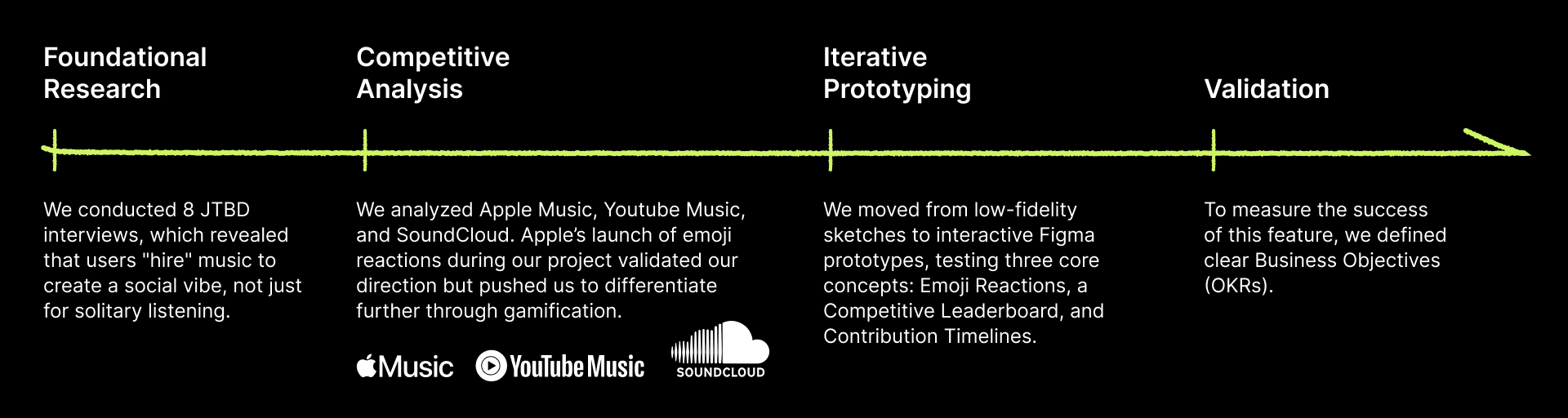
Using "Jobs-to-be-Done" to Uncover Social Motivations
Design Goals & Solution
The Vibe Check: Gamifying the Shared Experience
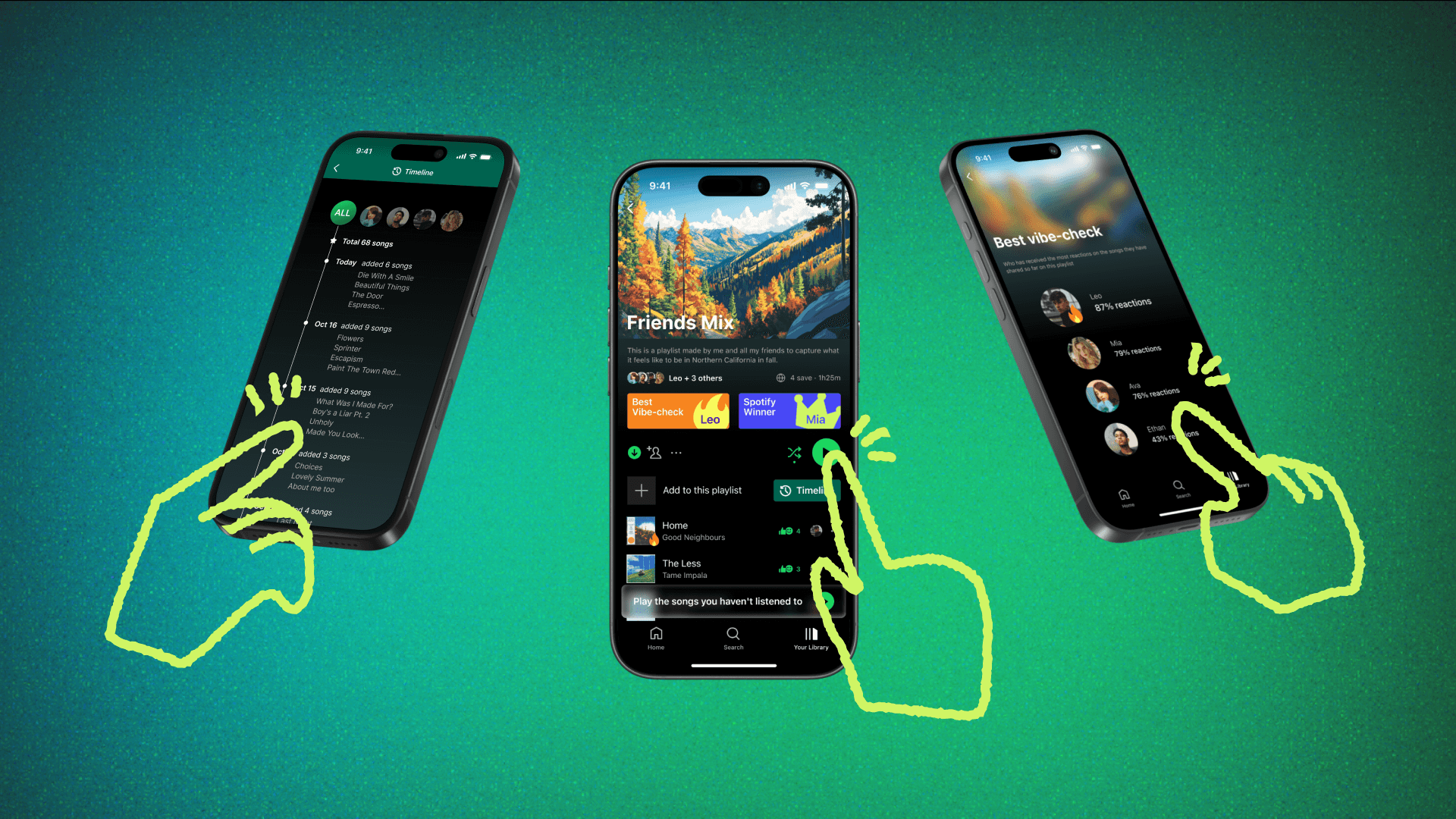
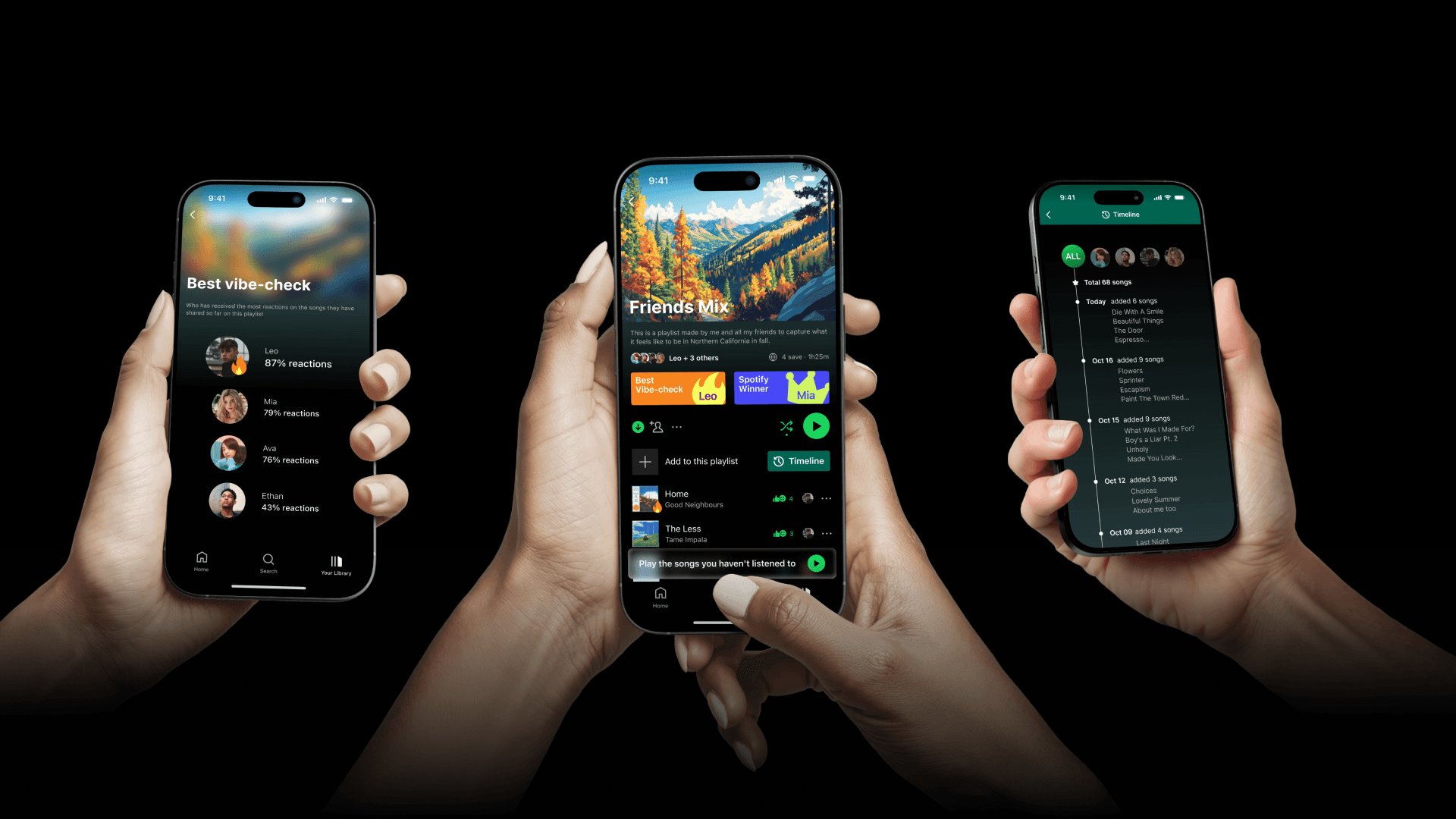
Our solution seamlessly integrates social mechanics into the existing Spotify UI:
The Gamified Dashboard
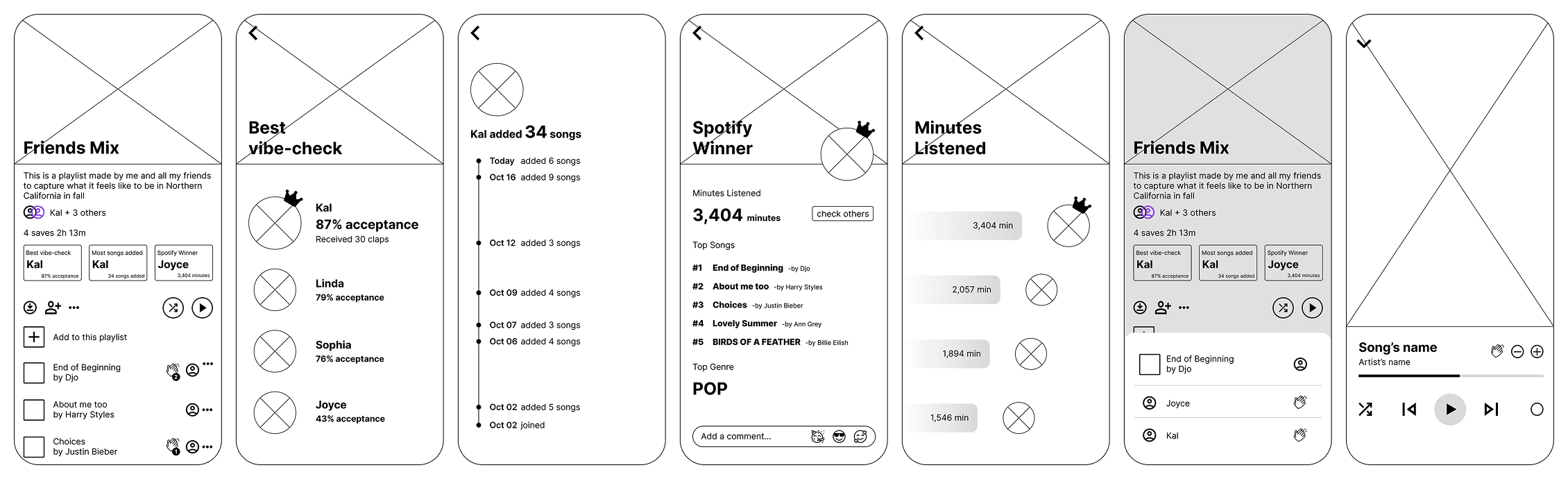
A new header for shared playlists that highlights group dynamics, such as "Music Addict" (most active listener) or "Vibe Check" (most liked songs).
Expressive Reactions
We moved beyond a simple "like" button, allowing users to react with a range of emojis to express specific emotions (e.g., "Fire," "Sad," "Party").
Transparent Attribution
A dedicated timeline view showing exactly who added what and when, turning the playlist into a shared history of the group's friendship.
Testing and Iteration
Refining the Tone: From "Competition" to "Connection"
User testing revealed a crucial insight: while users liked the idea of a leaderboard, they didn't want it to feel stressful or overly competitive. Terms like "Winner" felt alienating. Based on this, we pivoted the copy to be more playful and celebratory (e.g., changing "Winner" to "Music Addict"). We also expanded the reaction set after users reported that a single "clap" emoji felt too limiting for the diverse emotions music evokes.
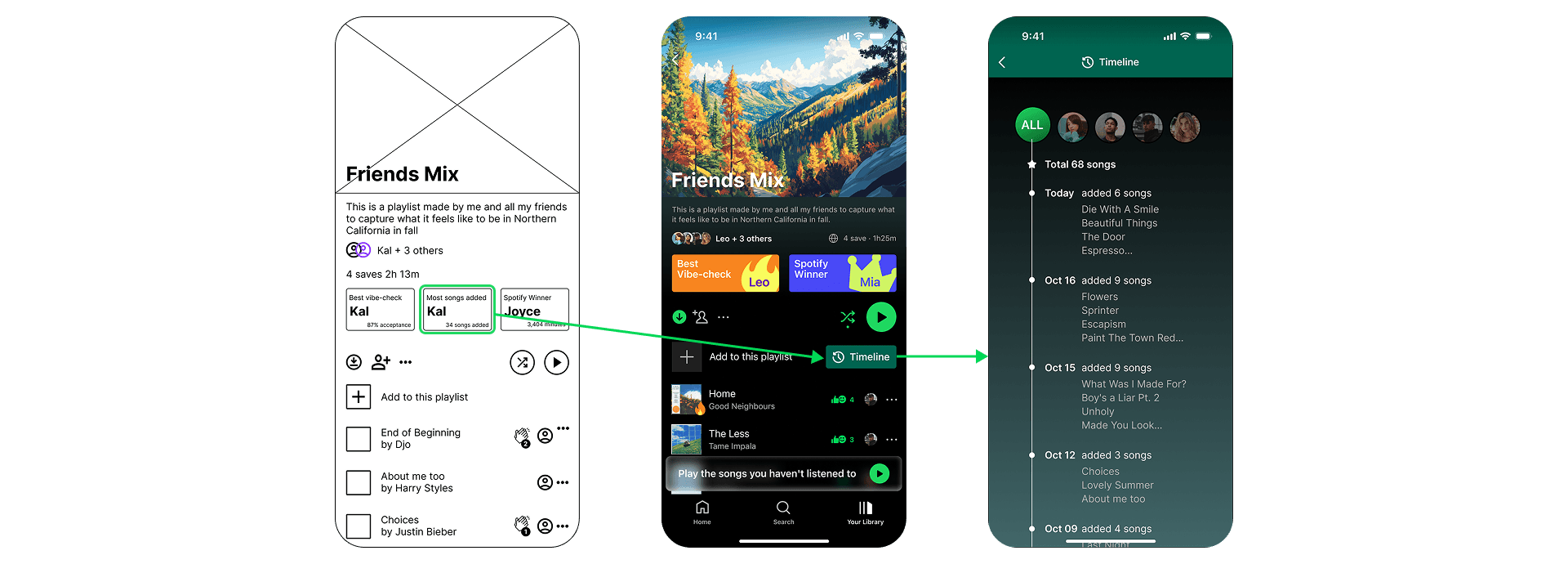
Kept the timeline feature but moved it to a separate section. Users found the accolade tiles confusing, so we used colors, visuals, and explanatory text to distinguish them.
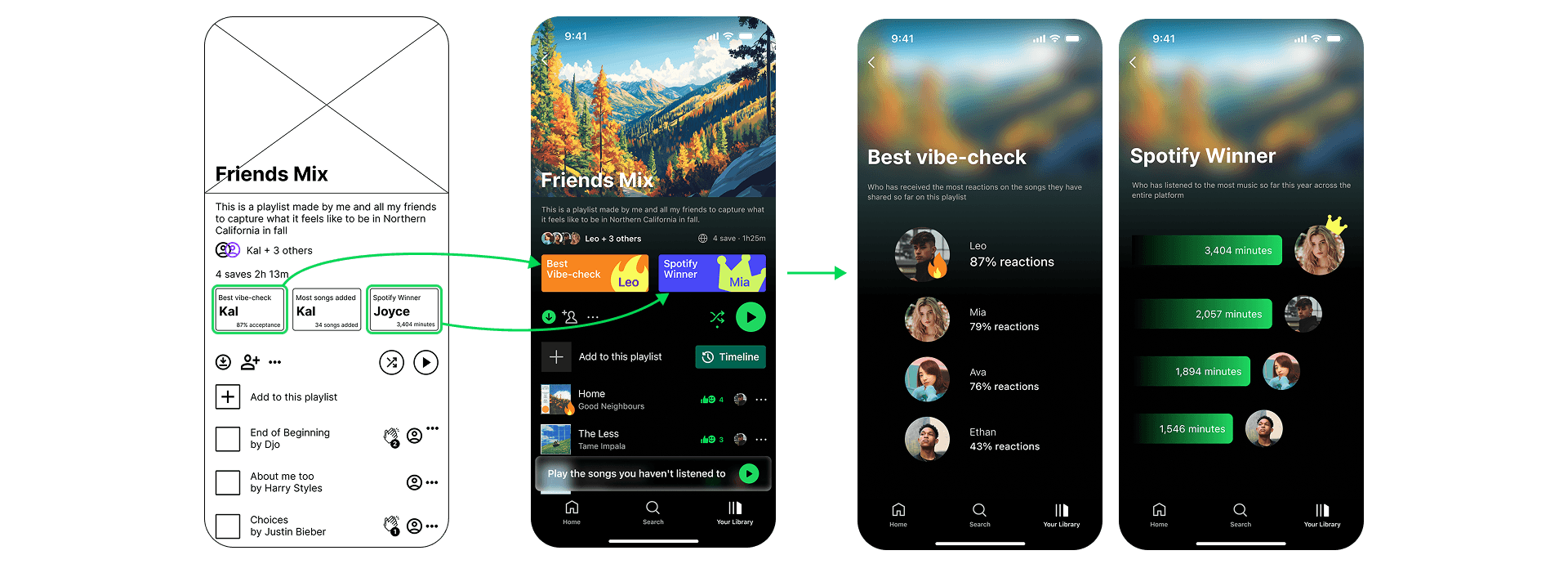
For Best Vibe-Check and Spotify Winner, users expressed confusion about what the labels represented. To address this, we used colors and visuals to distinguish their meanings and added explanatory text on the respective pages.
Results and Impact
Defining Success through Engagement Metrics (OKRs)
To measure the success of this feature, we defined clear Business Objectives (OKRs):
Objective
Increase Meaningful User Engagement.
Key Result
Increase Daily Active Users (DAU) by 10% through social triggers.
Increase average session duration by 10% as users spend time reacting and exploring the dashboard.
Differentiation
This feature positions Spotify not just as a music player, but as a social hub, distinguishing it from the sterile utility of competitors like Apple Music.
Conclusion
Balancing Utility with Delight
This project highlighted the delicate balance between "Gamification" and "Social Connection." I learned that features don't exist in a vacuum; they must match the emotional context of the user. By pivoting from a "competitive" frame to a "connective" one, we created a feature that feels authentic to the music listening experience. Future iterations would focus on adding direct commenting to further deepen the in-app conversation.
Read more