SUKUL: An AI-Powered Design Mentor for the Material World
Leveraging Generative AI and Google AI Studio to turn local resources into engineering tools.
My Role
Lead Product Designer & Researcher (Thesis Project)
Team
2 Designers (Collaboration with Upasana)
Company
UC Berkeley Master of Design (Thesis)
Tools
Figma, Google AI Studio (LLM Prototyping), User Testing, Physical Prototyping
Introduction
The "Fabrication Divide": Why Creativity Shouldn't Depend on Location
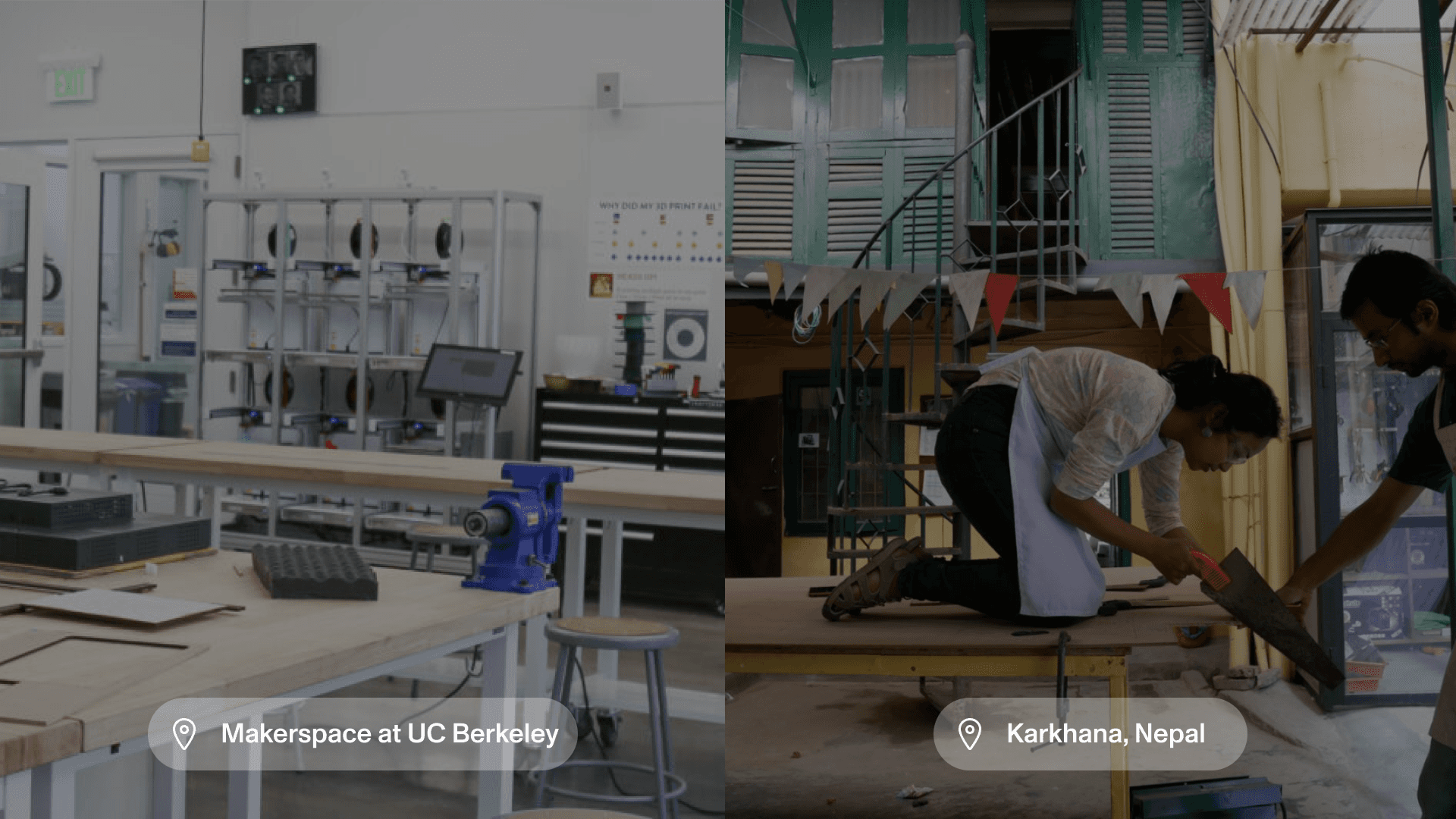
Stakeholder and Problem Statement
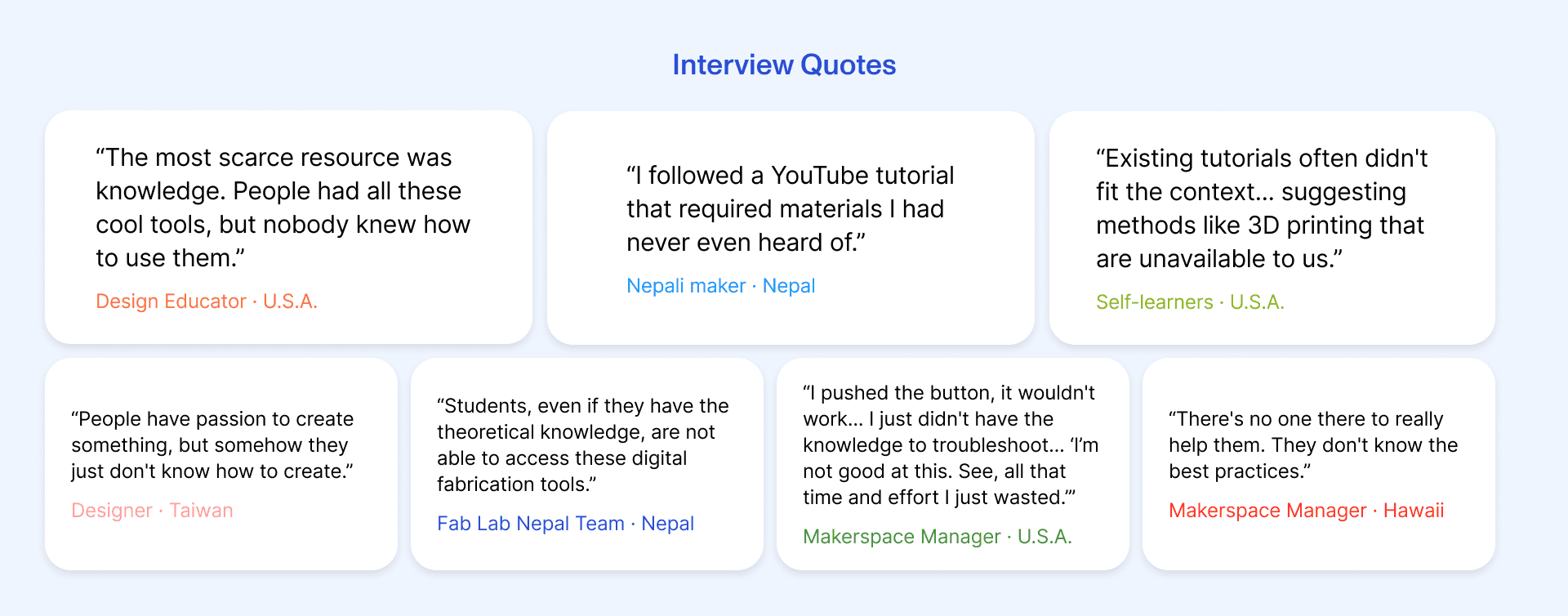
Creativity without Guidance leads to Abandonment
Process
Why We Ditched the "Physical Kit" for an "AI Ecosystem"
We utilized a Generative Design Research framework.
Discovery
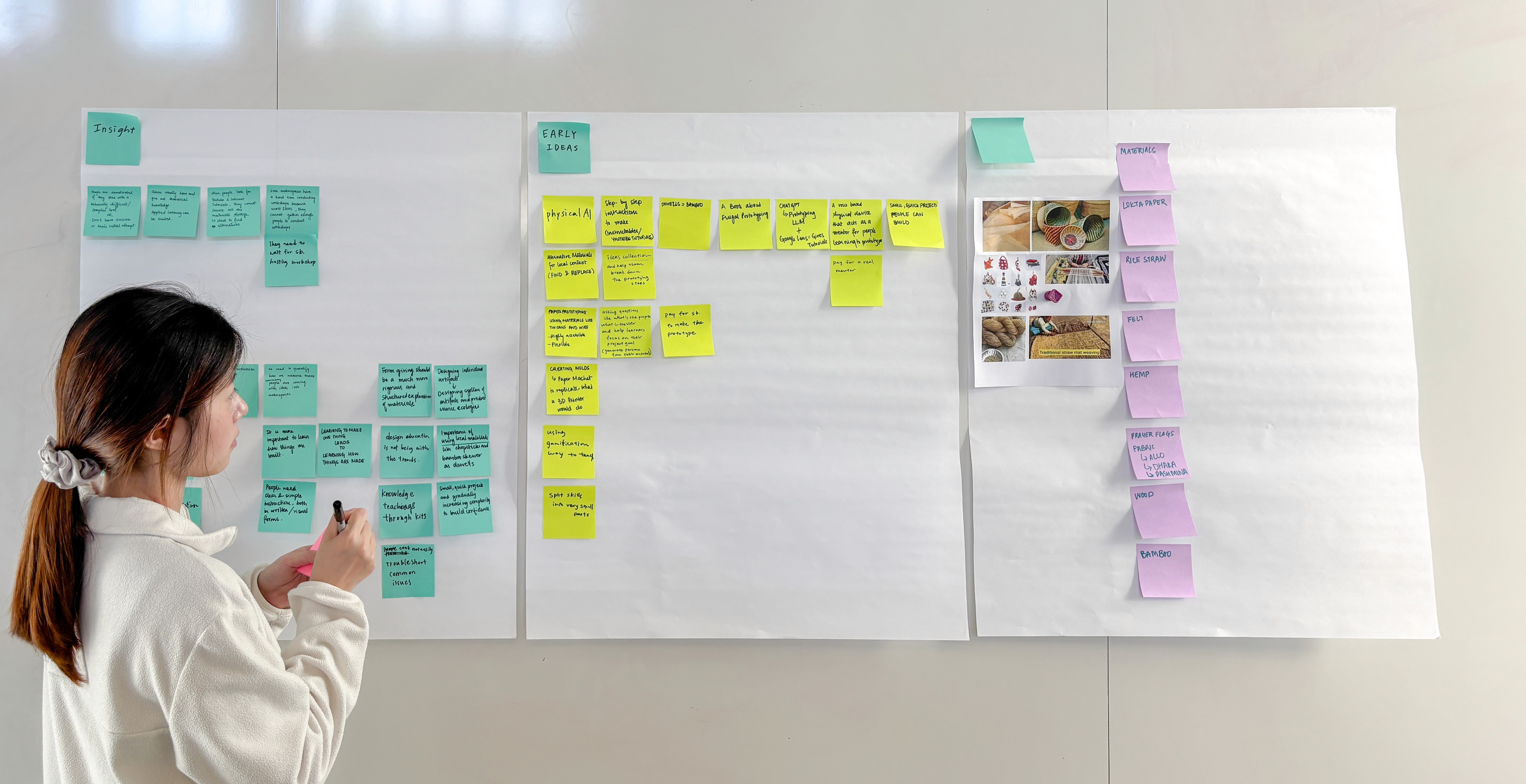
We interviewed diverse stakeholders, from FabLab leaders in Nepal to design educators at Berkeley.
Synthesis & Pivot
Affinity mapping revealed that shipping physical "material kits" would suffer the same logistical failures as existing tools. The barrier wasn't the material itself, but the knowledge of how to use it.
Reframing
We pivoted to a "Resource-First" approach. Instead of asking "What do you want to make?", the system asks "What do you have?" and adapts the instructions accordingly.
My Role and Responsibility
Owning the Product Vision: From Qualitative Research to AI Implementation
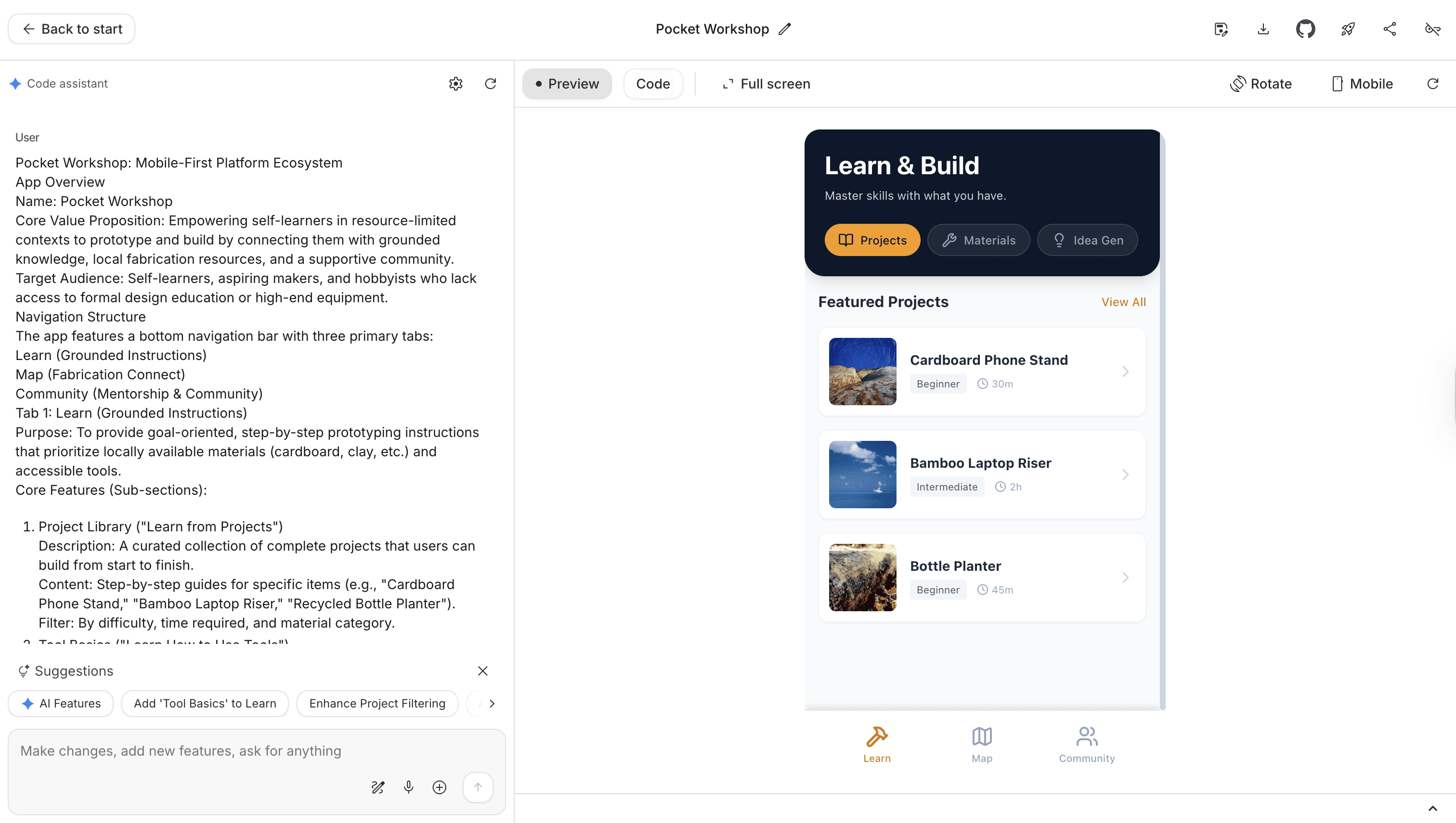
Generative Iterations: From Prompt to UI
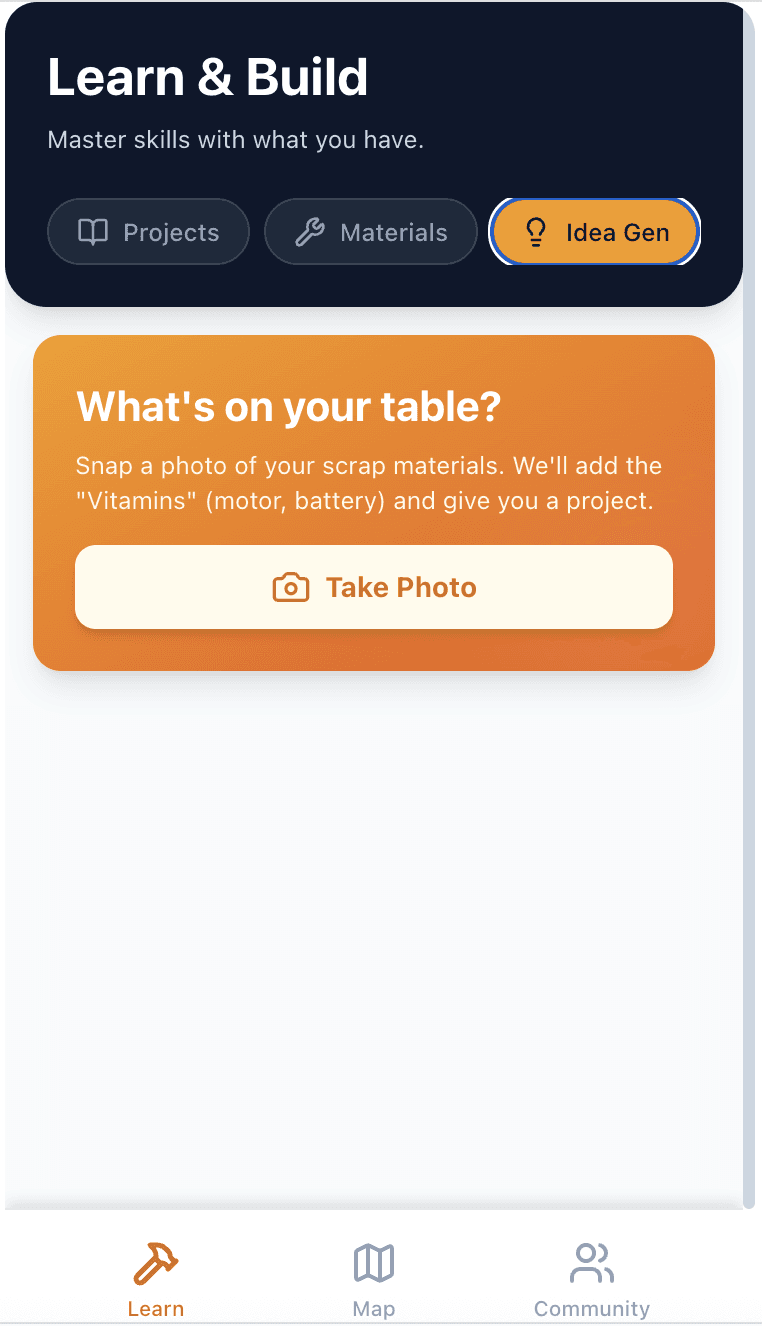
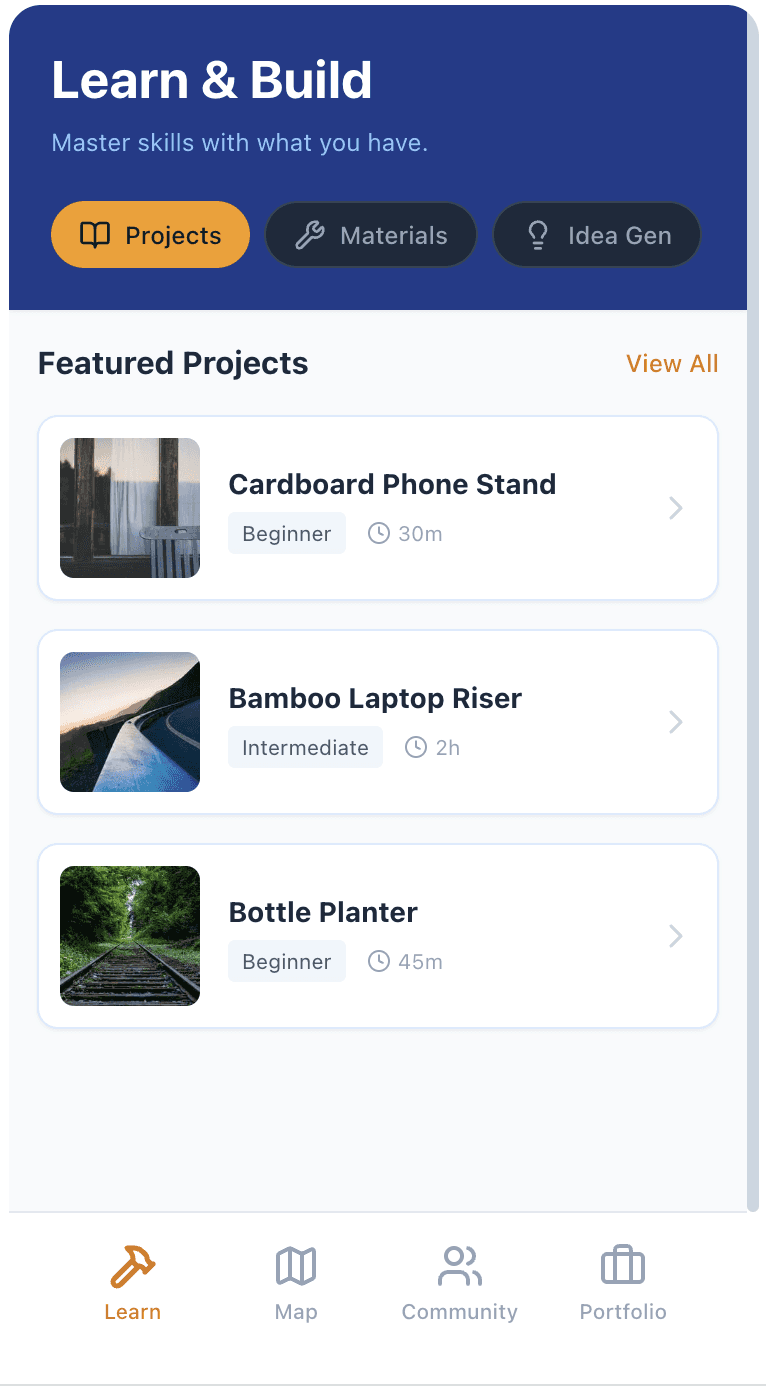
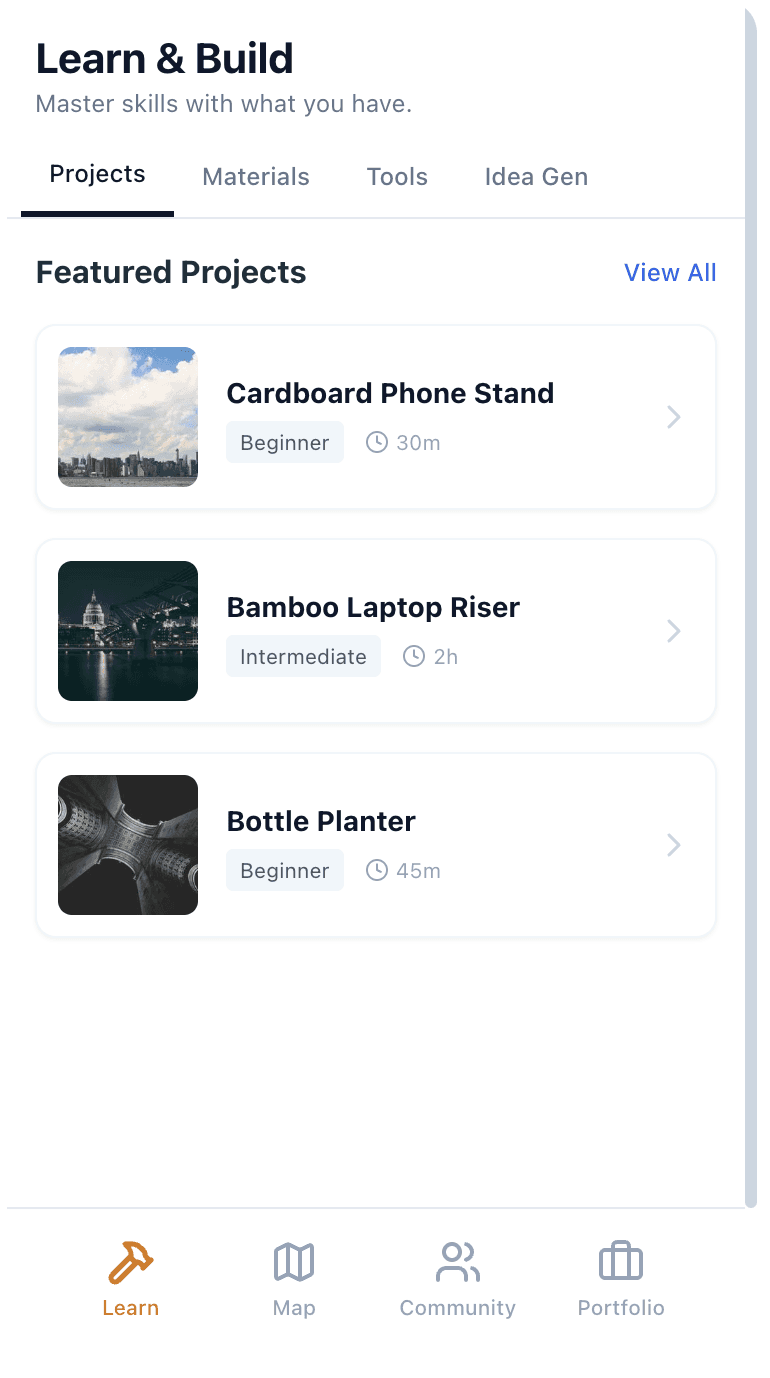
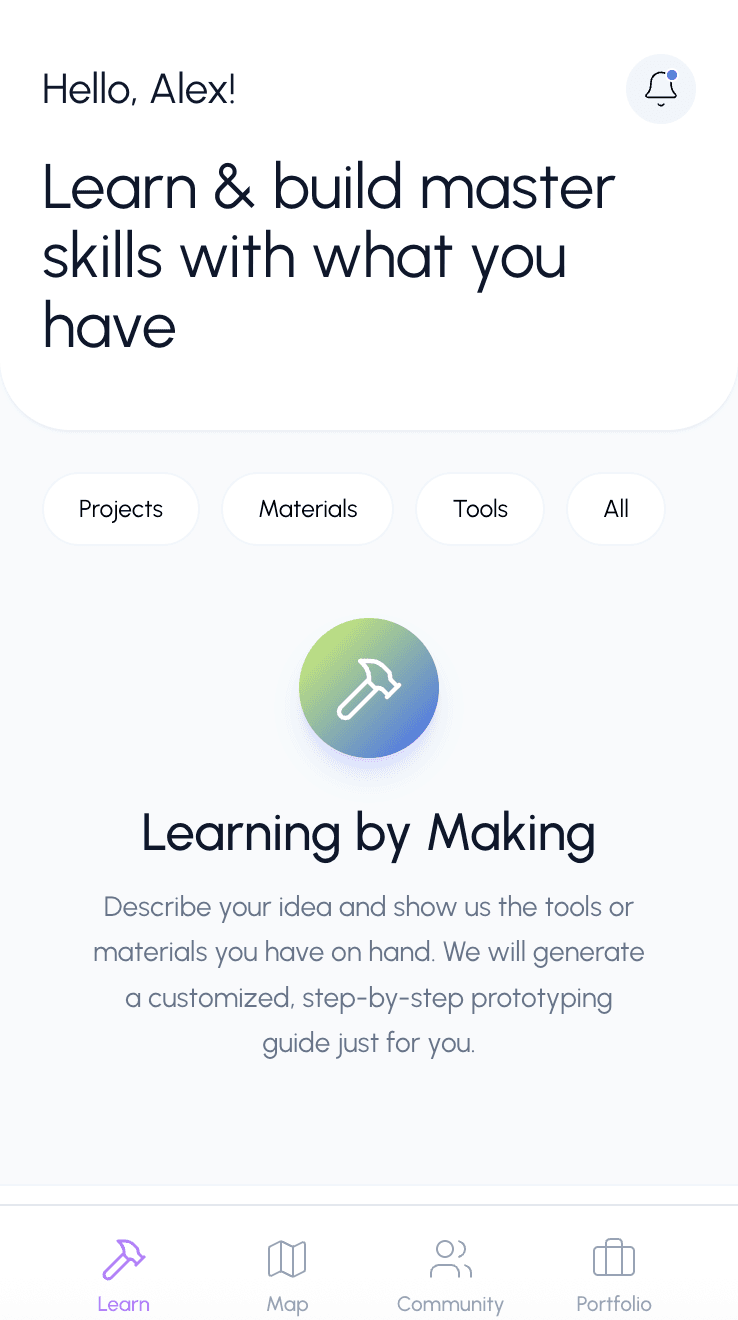
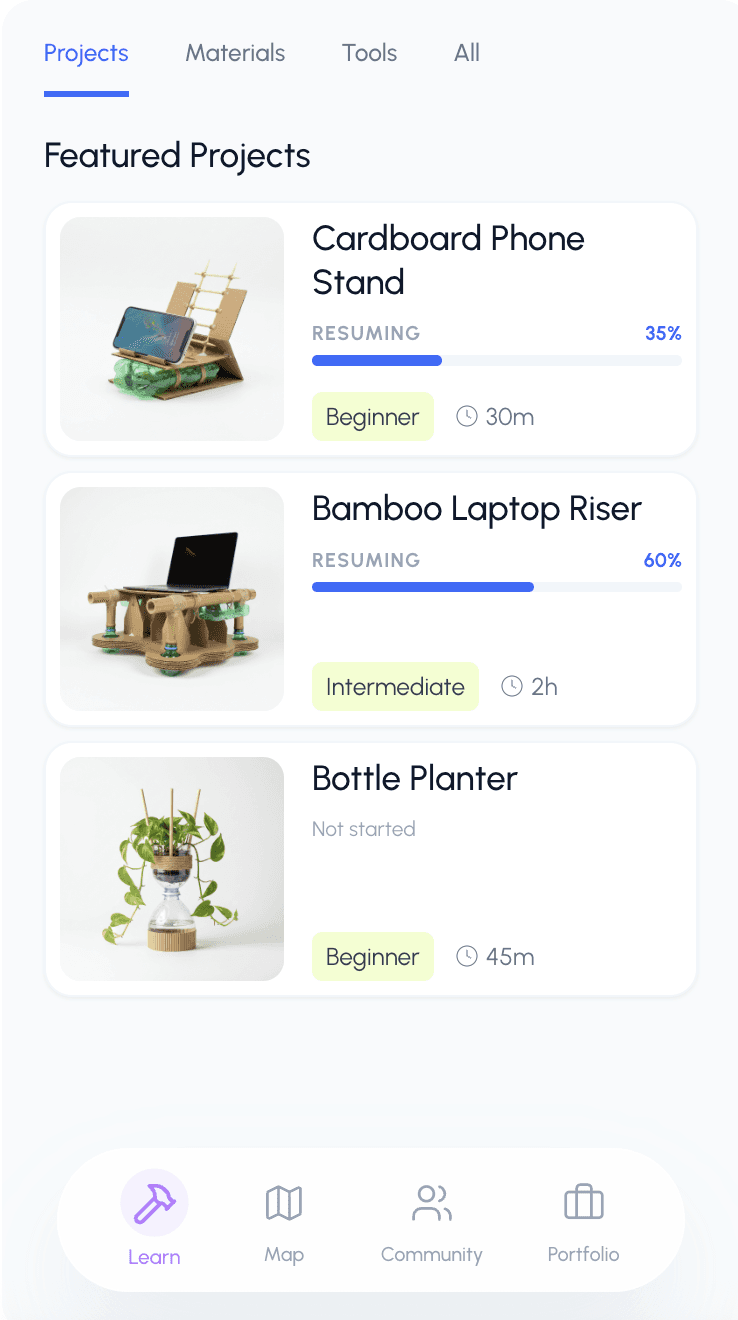
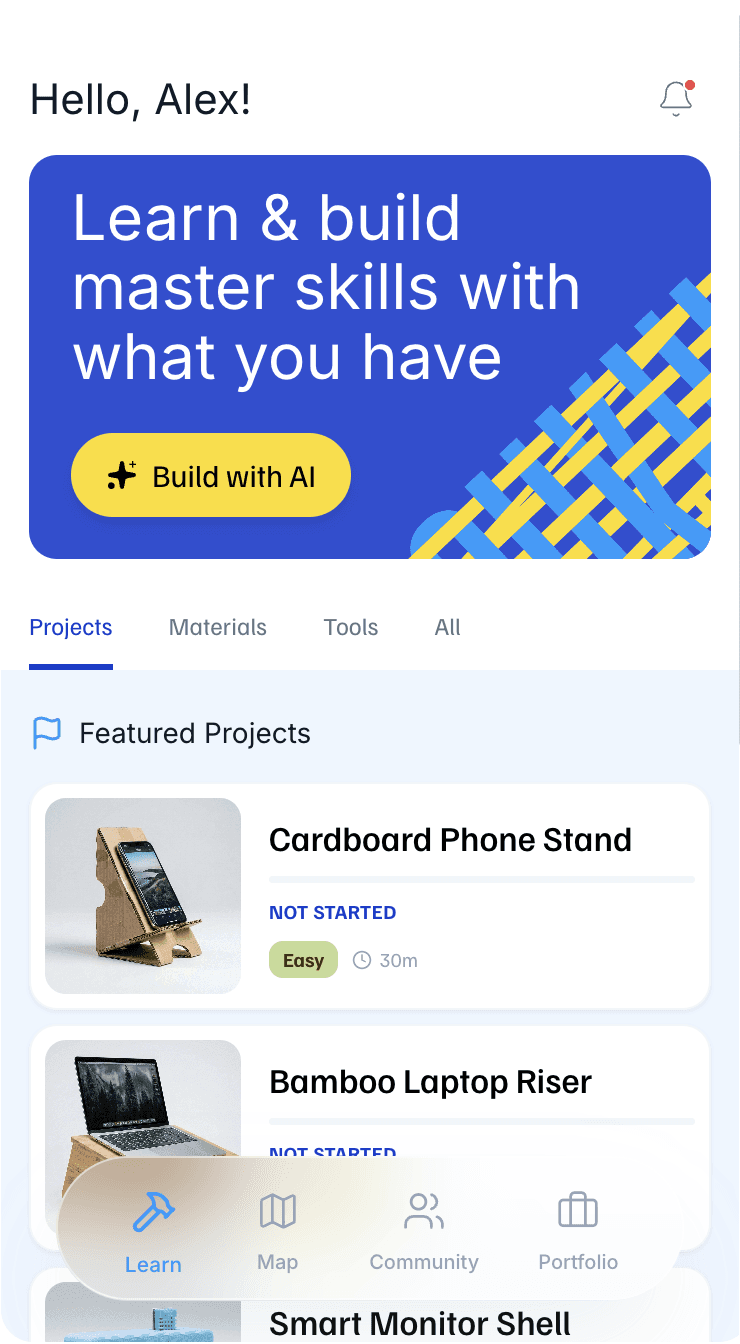
Design Goals & Solution
Build with AI: A Context-Aware Digital Mentor
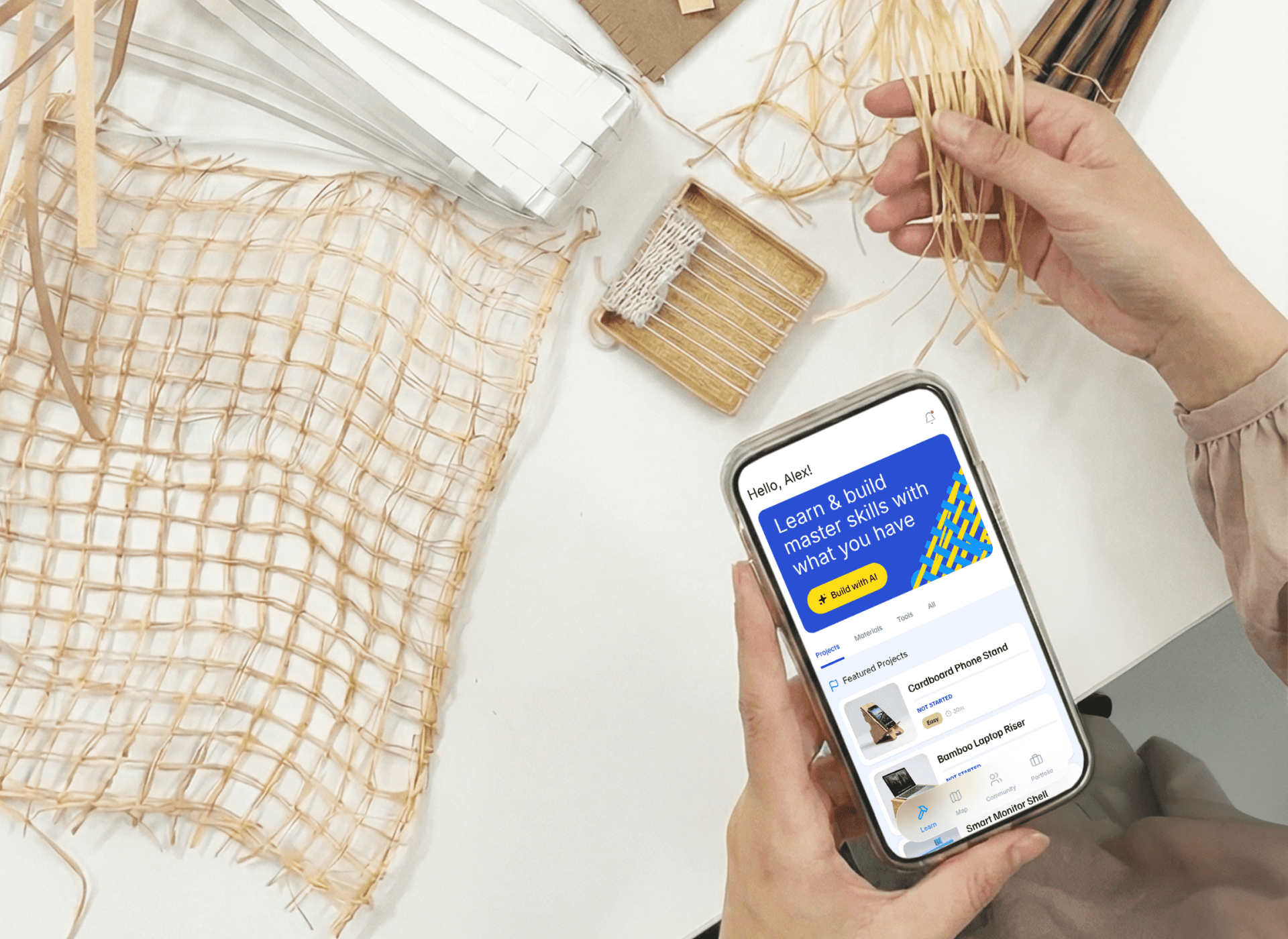
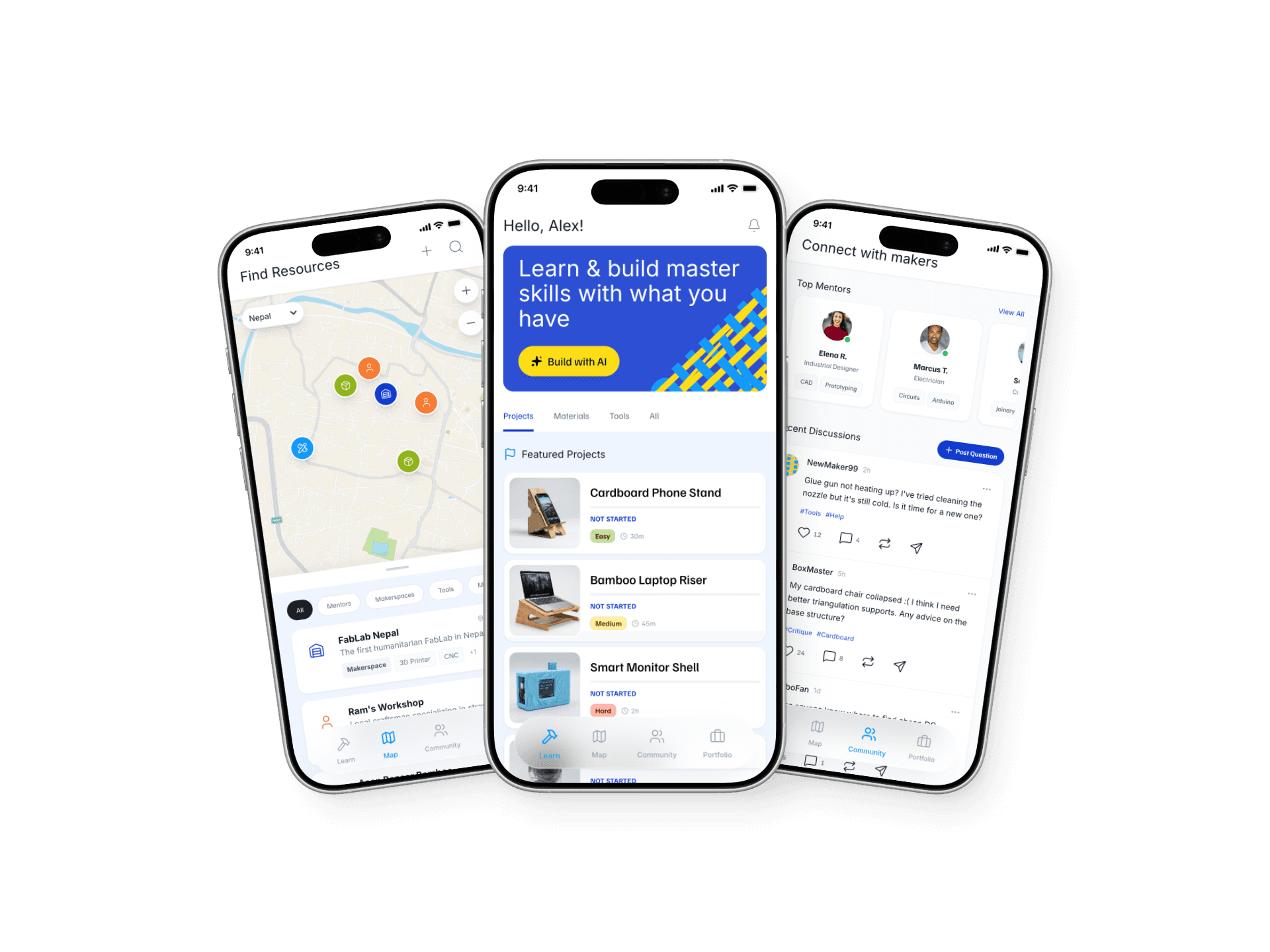
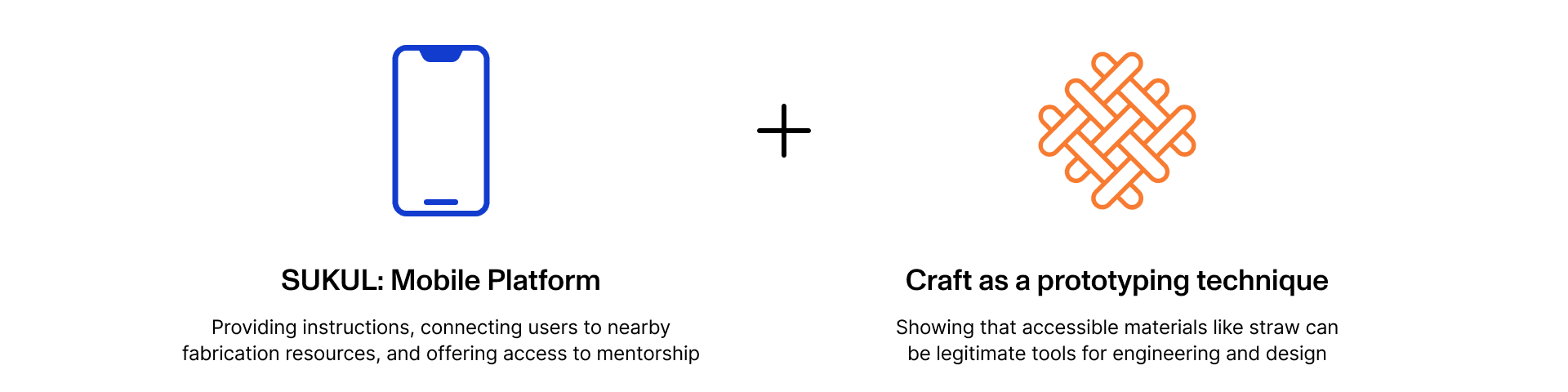
SUKUL is a mobile-first platform (Pocket Workshop) that bridges the knowledge gap.
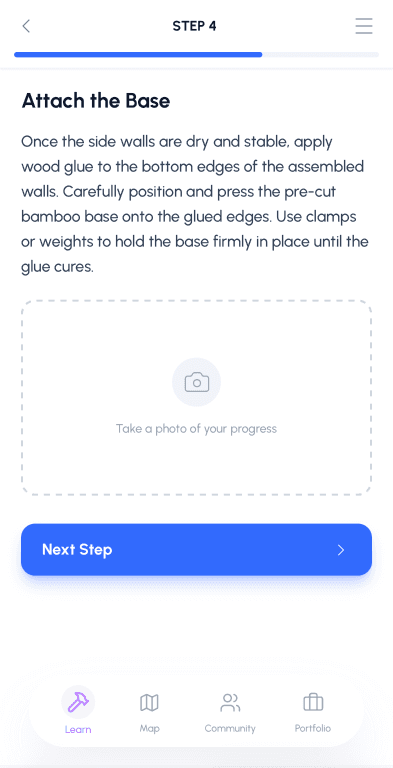
Structured Learning
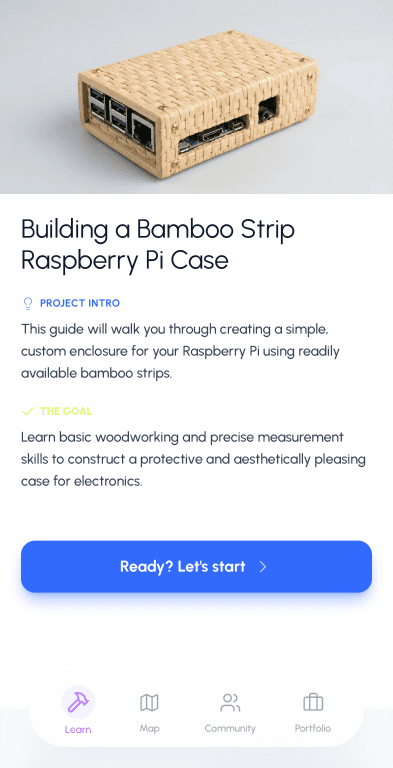
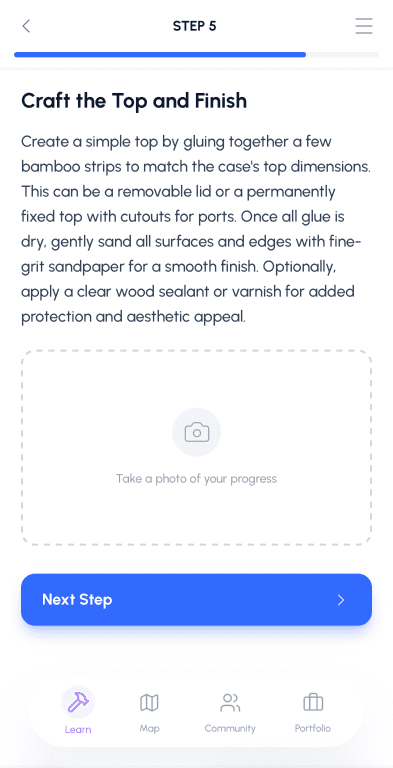
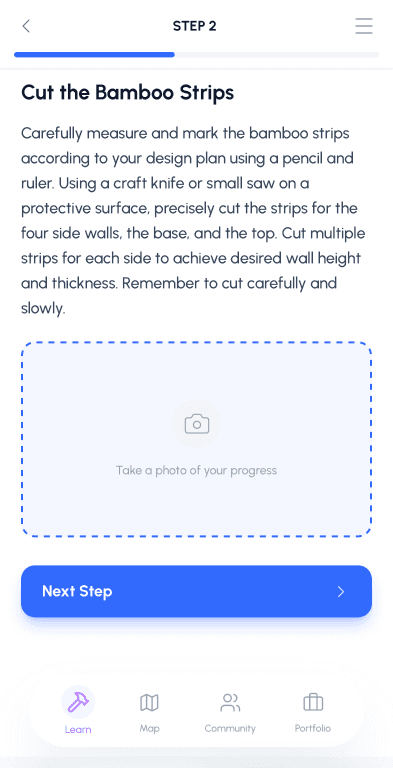
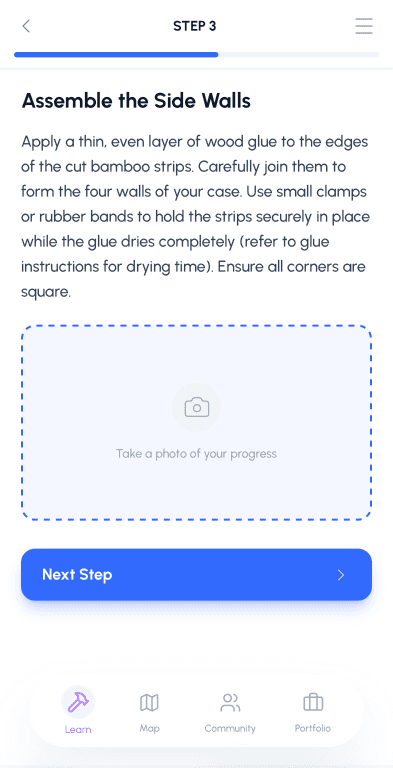
I designed a feature where users input a text prompt or sketch. Using a prototyped LLM backend, the app analyzes the request against the user's available materials (e.g., "I have rice straw and tape") to generate tailored, step-by-step fabrication guides.
Local Knowledge and Respect for Context
Learners should be able to begin with what is already around them—materials that hold cultural memory, familiarity, and identity.
Connection and Mentorship
Even if someone is learning alone, they should feel supported—by instructions, by a community, by a system that responds to them.
Testing and Iteration
Validating Cognitive Load Reduction with Functional AI Prototypes
The context-aware AI significantly reduced the "paralysis of starting." Users reported high confidence because the instructions adapted to their reality, rather than forcing them to conform to a rigid tutorial. The "Sacrificial Prototype" method proved that AI could successfully act as a surrogate mentor.
Results and Impact
Proving that Innovation isn't Contingent on High-Tech Labs
SUKUL demonstrated that we can democratize design not by shipping machines, but by delivering knowledge. The system successfully empowered self-learners to translate abstract ideas into physical reality without industrial tools. By validating local resources as engineering materials, we expanded the definition of "prototyping" to be more inclusive, sustainable, and accessible.
Conclusion
Preserving Ancient Knowledge for a Modern Tech Context
Feedback from industry experts highlighted SUKUL's potential beyond education. By creating a database of material properties, the platform serves as a digital vessel for preserving ancient craft knowledge (like traditional weaving) that is at risk of being lost.
Next Steps
Global vs. Local
Tailoring the narrative for different stakeholders, positioning it as an "Access Tool" for the UN/NGOs, and a "Differentiation Engine" for tech hubs seeking unique sustainable design languages.
Scalability
Expanding the AI's training data to include a broader library of indigenous fabrication methods, creating a "smart gateway" between traditional wisdom and modern product design.
Read more